


The Urban Renewal Bill is back in the news. In a written parliamentary reply on 20 October 2026, Housing Minister Nga Kor Ming said owners’ replacement homes would be valued using future values, with developers bearing the cost according to projected profits that the government regulates and agrees on. He said owners should get terms “no less favourable”, and that the bill would complement, not replace, existing laws on dilapidated strata buildings. But the bill has not been passed: its debate was postponed in August 2025 and its final consent threshold is still unsettled. If you own an older KL flat, there is nothing to sign yet, but it is a good time to understand your rights and your unit’s real value.
Old flats, new rules? Not law yet.
What the minister said this week
The reply answered Bukit Bintang MP Fong Kui Lun, who asked about compulsory acquisition of abandoned strata buildings and ageing blocks such as Hicks Mansion in Bukit Bintang. The key points, paraphrased:
- Complement, not replace. The Strata Titles Act 1985, amended in 2016, already has a mechanism for dilapidated or abandoned strata schemes, and the Land Acquisition Act 1960 sets acquisition procedures. The Urban Renewal Bill would add a broader renewal tool.
- Valuation on future value. Owners’ replacement homes would reflect the value of their existing property, using future values, with developers bearing the cost based on regulated projected profits.
- No less favourable terms. Owners should receive rights and interests no less favourable than they have now, including a suitable new property.
- Case by case. For Hicks Mansion, the right mechanism depends on its title status and condition.
Nga’s message was blunt: “The government cannot remain silent” about dangerous, dilapidated buildings.

Where the bill stands: a short timeline
| When | What happened |
|---|---|
| August 2025 | Bill tabled; the government said it would set an 80% consent threshold for all projects, instead of 80%, 75% or 51% depending on building age and condition |
| 28 August 2025 | Second reading presented; debate and vote postponed after objections, mainly over consent thresholds |
| January 2026 | Communications Minister Fahmi Fadzil said Cabinet decided to withdraw the bill for improvements; Nga said KPKT was ready to re-table it, subject to Cabinet |
| 20 October 2026 | Nga’s written reply on valuation and complementing existing laws; the bill remains on Parliament’s order paper and has not been formally withdrawn, according to The Edge |
In short: the direction is clear, but the details are not final. Critics still say thresholds that are too low could undermine homeowners’ rights. Anything you hear about specific numbers should be checked against the version Parliament actually debates.
Why “projected profits” matters to owners
Valuing an old flat at today’s market price can shortchange owners, because the land under it may be worth far more once redeveloped. Linking compensation to the developer’s projected profits is meant to share some of that future value with existing owners. The open questions are how the profit figure is set, who checks it, and whether owners get independent valuations. Those details will decide whether the deal feels fair in practice.
What to do now if you own an older flat
- Know your title. Do you hold a strata title, a master title or no title yet? It affects which law and process could apply.
- Know your current value. Look at recent transacted prices in your block, not asking prices. We can help with this.
- Talk to your JMB or MC. Redevelopment proposals usually come through the management body. Ask to see any approach in writing.
- Do not sign early. Until the law is passed, any offer is a private agreement. Get a lawyer and an independent valuer.
- Plan your interim housing. Redevelopment takes years. Ask who pays for your rent and moving costs in the meantime.
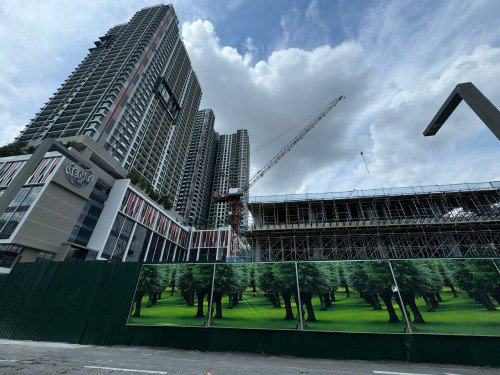
Buyers: should you buy an old flat hoping for redevelopment?
I would not buy purely on a redevelopment hope. The bill may change, consent may never be reached, and the timeline could run for many years. Buy an older unit only if the price, rental and location make sense today. If you want a newer home in an established area, compare new and completed options in Taman Desa, Old Klang Road and Cheras, and read completed vs new launch condo in KL.
💡 My practical view: for owners of old KL flats, the Urban Renewal Bill could eventually be a big opportunity or a big headache, depending on the final rules. The best protection is information: know your title, your unit’s real value and your management body’s plans. If you would rather move on now, our apartment-to-landed upgrade guide shows how to run the numbers.
Frequently asked questions
What is the latest on the Urban Renewal Bill in Malaysia?
How much owner consent does the Urban Renewal Bill need?
Will I get a new home if my old flat is redeveloped?
Own an older KL flat and not sure what to do?
WhatsApp DMS Team. We can give you a realistic view of your unit’s current value, your options to hold, sell or upgrade, and what to ask if a redevelopment proposal comes your way.
About the author: Jason Chan (DMS Jason Chan)
Jason is a registered real estate negotiator (REN 78007) and founder of DMS Team, a property consultancy registered under EUM Realty Sdn Bhd [E(1)1708] with consultants across Kuala Lumpur and Johor Bahru. He researches and reviews every market analysis published on dms-team.com.
This article is general information as at 26 October 2026, written from an agent’s practical perspective. It is not legal advice. The Urban Renewal Bill has not been passed and its final wording, including consent thresholds and valuation rules, may change. Speak to a lawyer before signing anything related to a redevelopment proposal.
Sources: EdgeProp: Urban Renewal Bill to factor in developers' projected profits (21 October 2026); The Star: Urban Renewal Bill to complement laws on dilapidated strata buildings (21 October 2026); EdgeProp Daily Digest, 21 October 2026; The Edge: consent threshold to be raised to 80% (28 August 2025); Malay Mail: Urban Renewal Bill ready to be re-tabled (20 January 2026).
Last updated 26 October 2026 · DMS Jason Chan, REN 78007